
 EN
EN



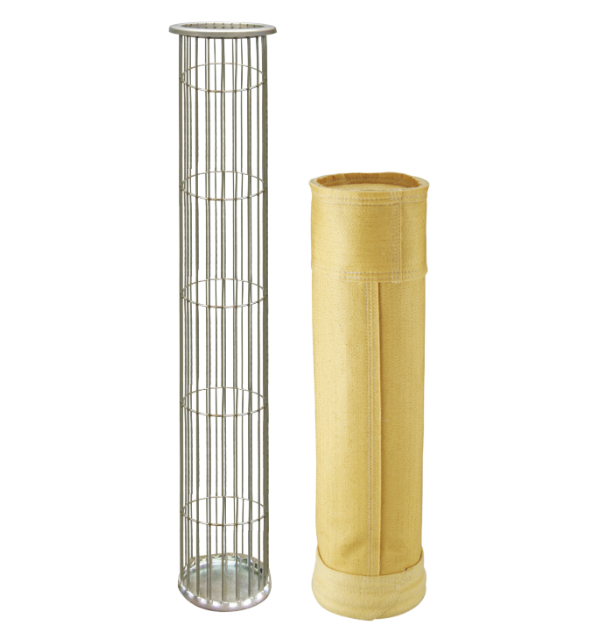
The limits of one-size-fits-all
Standard filter bags work well enough in standard applications. But industrial filtration rarely stays standard for long. Process conditions shift, emissions regulations tighten, and equipment ages. When the standard bag no longer fits the application, literally or figuratively, customization becomes the only viable path.
The question is not whether to customize. The question is what customization options actually exist. Many plant engineers assume that custom means "different size" and stop there. In reality, a full-service custom filter provider offers a range of design modifications that go far beyond simple dimensional changes.
Dimensional customization: beyond length and diameter
Size adjustments are the most obvious form of customization, but they are also the most misunderstood. Standard filter bags come in common diameters, 100mm, 125mm, 150mm, 180mm, 250mm, and standard lengths. But industrial baghouses and filter housings are not always built to standard specifications. Retrofits, legacy equipment, and custom-engineered systems often require non-standard dimensions.
Custom sizing goes beyond overall length and diameter. The top cuff style can be modified to match specific cell plate designs, such as snap bands, rubber edges, or felt flanges. The bottom construction can be open, closed, or fitted with special configurations to accommodate different cage designs. Even the shape of the bag can vary: round, oval, or pleated configurations are all possible depending on the housing geometry.
One example involves a cement plant with an older baghouse that had non-standard tube sheet holes. The standard replacement bags did not seal properly, causing bypass and emissions exceedances. A custom provider measured the actual tube sheet, designed bags with a slightly oversized cuff, and solved the sealing problem without modifying the equipment. The fix was simple but effective, and only possible through dimensional customization.
Material selection for complex environments
Standard filter bags typically use polyester or polypropylene. These materials work well for moderate temperatures and neutral chemical environments. But complex applications demand more specialized media.
High-temperature processes, such as cement kilns, metal smelting, and incinerators, require materials that maintain structural integrity above 200°C. Nomex handles up to 200°C, P84 up to 260°C, and fiberglass with PTFE membrane can withstand even higher temperatures. Acidic gas streams call for PPS or PTFE, which resist chemical attack that would degrade polyester within weeks. Abrasive dust loads favor heavy-weight needled felts or woven fabrics with enhanced surface finishes.
The custom provider's role is to match the media to the specific conditions: temperature, chemical composition, dust characteristics, and cleaning intensity. This is not a simple substitution. It requires understanding the tradeoffs, higher temperature resistance often means higher cost, and chemical resistance can come at the expense of mechanical strength.
Seam and construction variations
The way a filter bag is constructed affects its performance as much as the material itself. Standard bags use standard seam types, such as single needle, double needle, or ultrasonic welding. Complex applications may require reinforced seams, special thread materials, or welded construction to prevent leakage through the stitching.
For example, bags used in high-temperature applications often require Nomex or PTFE thread to match the thermal performance of the fabric. Standard polyester thread would melt at temperatures that the fabric can withstand, creating a weak point that fails prematurely.
Custom construction also includes options like:
-
Reinforced seams for high-pressure or high-abrasion applications
-
Special lifting handles for easier installation and removal
-
Reverse collar construction for specific housing designs
-
Multiple layered bags for applications requiring staged filtration
-
Bags with covers for open-top housings
Filtration rating and performance tuning
Micron rating determines what particle sizes the bag captures. Standard ratings range from 1 micron to 200 microns. But the effective filtration performance depends on more than the rated micron size. The media structure, surface treatment, and even the way the bag is pleated or folded all affect capture efficiency and pressure drop.
Custom providers can adjust the filtration rating to match the specific particle size distribution of the process dust. For fine dust with particles under 10 microns, a tighter media or a membrane-laminated fabric may be necessary. For coarse dust, a more open media reduces pressure drop without sacrificing capture efficiency.
Some custom providers offer gradient density construction, where the media progressively tightens from the upstream to the downstream side. This design extends service life by allowing deeper dust loading before cleaning is required. It is a subtle modification, but one that can significantly reduce changeout frequency in high-dust applications.
The tradeoffs and honest limitations
Customization is not always the right answer. Every design modification adds cost and complexity. Non-standard sizes require custom tooling or manual production. Special materials may have longer lead times. Complex seam constructions take more labor to produce.
| Customization Type | Benefit | Tradeoff |
|---|---|---|
| Non-standard dimensions | Fits legacy or custom housings | Higher per-unit cost, longer lead time |
| Specialty media (PTFE, Nomex, P84) | Handles extreme temperatures/chemistry | Significant cost premium |
| Reinforced seams | Longer life in abrasive or high-pressure applications | Increased production time |
| Gradient density construction | Extended service life | More complex manufacturing |
| Custom filtration rating | Matches specific particle size distribution | May reduce initial efficiency |
There is also the question of minimum order quantities. Some custom features are only available at volume. A plant that needs five custom bags may face different economics than one ordering five hundred.
The value of customization lies in solving problems that standard products cannot solve. For standard applications, standard bags remain the more economical choice. The key is knowing when to customize and when to stay standard, and having a provider that offers both options.
Companies like GL Filter Bags offer a full range of custom service options, from material selection and dimensional adjustment to specialized seam construction and filtration rating tuning. Their engineering team works directly with plant personnel to identify the right modifications for each application, ensuring that custom means better, not just different.