
 EN
EN



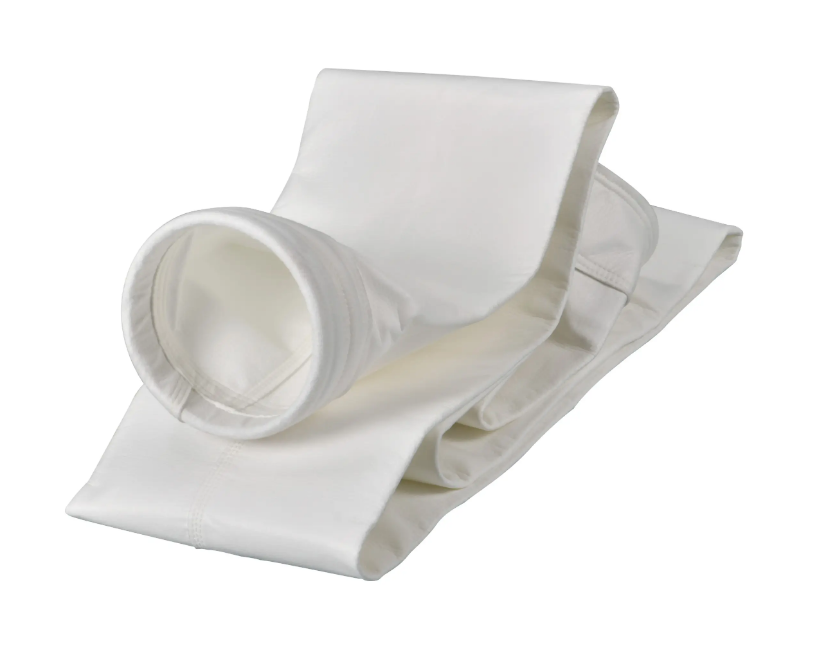
The gap between a standard catalog and a real solution
Opening a filter bag catalog is easy. Finding a bag that fits a specific housing, handles a particular dust load, and survives the chemical environment of a given process—that is where things get complicated. Standard off-the-shelf products cover maybe 80% of applications. The remaining 20% are where problems live.
Those problem applications are exactly where a full-service custom filter provider proves its worth. Not every filtration challenge can be solved by picking a size from a dropdown menu. Some require material substitutions. Some need non-standard dimensions. Others demand entirely new bag configurations that simply do not exist in any catalog.
What full-service actually means
A full-service custom filter provider does more than sew bags to order. The scope starts with application analysis—understanding the dust characteristics, temperature range, moisture content, and chemical exposure of the specific process. From there, the provider recommends appropriate media, confirms compatibility with the existing baghouse or filter housing, and produces a bag that matches the exact specifications.
The service extends beyond manufacturing. Full-service providers typically offer material testing, prototype development, and on-site support during installation. Some even provide filter bag replacement scheduling and inventory management, reducing the operational burden on plant maintenance teams.
This end-to-end approach matters because filtration problems rarely have single-point causes. A bag that fails prematurely might be the wrong material for the temperature, or the wrong size for the cage, or the wrong seam construction for the cleaning method. A full-service provider looks at the whole picture rather than just the bag.
The numbers behind custom filtration
The global filter bag market was valued at approximately USD 8.1 billion to 9.84 billion in 2024, with projections reaching USD 14.2 billion to 15.53 billion by 2033 or 2034. That growth reflects increasing regulatory pressure on industrial emissions and the recognition that filtration is not an area to compromise.
Within this market, pulse jet systems—which rely heavily on properly designed filter bags—accounted for roughly USD 3.4 billion in revenue in 2024 and are growing at a CAGR of about 6.5%. These systems are widely used in cement plants, steel mills, and power generation facilities. The demand for pulse jet systems is growing as industries look for cost-effective, high-performance solutions to maintain optimal airflow while managing high dust loads.
What these numbers do not show is how many of those filter bags are non-standard, customized, or application-specific. In practice, a significant portion of industrial filtration involves some level of customization, whether in material selection, dimensional adjustment, or seam design.
A case that proves the point
A chemical processing plant in the Gulf Coast region had been running standard polyester filter bags in their dust collection system for years. The bags performed adequately—until the process changed. A new product line introduced higher temperatures and a more corrosive gas stream. The standard bags started failing within weeks.
The plant brought in a custom filter provider to assess the situation. The provider analyzed the gas composition, measured the actual operating temperature, and reviewed the baghouse cleaning cycle. The recommendation was a switch to a PTFE-coated fiberglass media with a different seam construction. The new bags were designed to the exact dimensions of the existing cages, eliminating the fit issues that had accelerated wear on the previous bags.
The result was a bag life that went from six weeks to over eighteen months. The plant reduced changeout frequency, cut labor costs, and improved emissions compliance. The custom solution cost more per bag, but the total cost of ownership dropped significantly.
Material selection: more options than most realize
One of the primary advantages of working with a custom filter provider is access to the full range of filter media. Standard catalogs typically offer polyester, polypropylene, and maybe one or two specialty materials. A full-service provider can supply:
-
Nomex (aramid) for high-temperature applications up to 200°C
-
PPS (Ryton) for acidic environments with moderate temperatures
-
P84 (polyimide) for fine dust and high-temperature filtration
-
PTFE for extreme chemical resistance and temperatures up to 260°C
-
Fiberglass for high-temperature, high-chemical environments
-
Acrylic for moderate temperatures with good chemical resistance
Each material has specific strengths and limitations. The right choice depends on the operating temperature, the chemical nature of the gas stream, the dust characteristics, and the cleaning method used by the collector.
The practical limits of customization
Customization is not always the answer. For standard applications with mild conditions and straightforward requirements, off-the-shelf bags are perfectly adequate and more cost-effective. Custom solutions involve higher per-unit costs, longer lead times, and more upfront engineering work.
There is also the question of minimum order quantities. Some custom providers require MOQs that make small-batch customization impractical. Others offer flexible ordering, but the per-unit cost remains higher than standard products.
The value proposition of a full-service custom filter provider is not about customization for its own sake. It is about solving problems that standard products cannot solve. For applications where standard bags work, standard bags are the right choice. For everything else, the custom route is not just an option—it is a necessity.
Companies like GL Filter Bags have been providing custom filtration solutions across industries, with the engineering capability to match media to application and the manufacturing flexibility to deliver non-standard dimensions and configurations. Their approach reflects the reality that effective filtration starts with understanding the problem, not with picking a part number from a catalog.