
 EN
EN



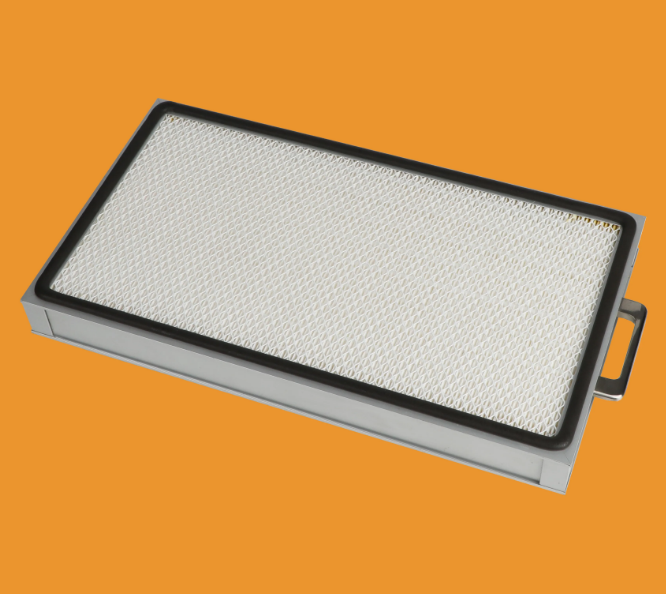
The cleaning problem that every cartridge collector faces
Cartridge collectors are widely used in industrial dust control because they offer high filtration efficiency, a small footprint, and relatively low resistance. But they have a persistent problem: as dust accumulates on the filter media, the filtration resistance increases. If the cartridges are not cleaned effectively and regularly, the system either fails to maintain airflow or consumes excessive energy trying to overcome the pressure drop.
Pulse-jet cleaning is the most common method for regenerating filter cartridges. A burst of compressed air is directed into the cartridge, flexing the media and dislodging the accumulated dust cake. In theory, this restores the cartridge to near-original condition. In practice, the cleaning performance is uneven.
The uneven distribution problem
The pulsed-jet pressure is not distributed evenly along the length of the filter cartridge. Pressure is typically high in the lower section of the cartridge and low in the upper section. This uneven distribution affects not only the stability of the entire system but also the dust emission concentration.
The result is incomplete cleaning. The lower sections of the cartridges get blasted clean, while the upper sections remain clogged with dust. Over time, the residual dust accumulates, increasing the baseline pressure drop and shortening the effective filtration cycle. Operators respond by increasing the cleaning pressure or frequency, which wastes compressed air and can damage the media.
How a Venturi nozzle changes the dynamics
A Venturi nozzle is a simple device with a carefully engineered internal geometry. It consists of a converging section, a narrow throat, and a diverging section. When compressed air passes through the nozzle, the velocity increases at the throat, creating a low-pressure zone that induces additional airflow from the surrounding environment.
In the context of a cartridge collector, the Venturi nozzle is installed at the top of the filter cartridge, just below the blow pipe. When the pulse-jet valve opens, compressed air passes through the nozzle. The Venturi effect draws in secondary air, up to 1.47 times the primary compressed air volume in some configurations, creating a larger volume of cleaning air that travels down the cartridge.
The key improvement is in the pressure distribution. With a Venturi nozzle, the pulsed-jet pressure in the lower section of the cartridge is effectively increased due to the larger induced airflow. This means the cleaning energy reaches further down the cartridge, addressing the uneven distribution problem that plagues standard nozzles.
The performance data that proves the improvement
Research has quantified the improvement. In one study, the addition of a Venturi tube resulted in an 8% reduction in residual pressure drop, a 6% improvement in fallen dust mass, and a 7% improvement in comprehensive filtration performance.
Another study found that the peak pressure at various points in an elliptical filter cartridge was 1.4 to 2.7 times that of a system without a Venturi. That is a significant increase in cleaning energy reaching the media.
Perhaps most compelling is the comparison of operating pressures. A study on baghouse performance found that including a Venturi tube at 2 kg/cm² improved cleaning efficiency to a level comparable to 3 to 4 kg/cm² without a Venturi. In other words, a Venturi nozzle allows the same cleaning effectiveness at a lower operating pressure. That translates directly to energy savings and reduced wear on the compressed air system.
| Configuration | Operating Pressure | Cleaning Effectiveness | Notes |
|---|---|---|---|
| Standard nozzle | 0.5 MPa (5 kg/cm²) | Baseline | Higher pressure required |
| With Venturi nozzle | 0.3-0.4 MPa (3-4 kg/cm²) | Comparable or better | Lower energy consumption |
| With Venturi nozzle | 2 kg/cm² | Equal to 3-4 kg/cm² without Venturi | Significant energy savings |
A real-world installation
A metal processing facility in the Midwest had been struggling with high energy costs and frequent cartridge replacements on their dust collection system. The system used standard nozzles with a cleaning pressure set at 0.5 MPa. The upper sections of the cartridges were never fully cleaned, and the residual pressure drop crept higher each week.
The facility retrofitted the system with Venturi nozzles. The cleaning pressure was reduced to 0.3 MPa, a 40% reduction. The cleaning effectiveness improved. The residual pressure drop stabilized at a lower level. Cartridge life extended by nearly 40%. The energy savings from reduced compressed air consumption paid for the retrofit within eight months.
The honest limitations
Venturi nozzles are not a universal solution. While they improve cleaning effectiveness, they also increase the filtration pressure drop during normal operation. The added restriction at the top of the cartridge creates a higher baseline resistance, which can offset some of the energy savings from reduced cleaning pressure.
There is also the risk of over-cleaning. The increased cleaning energy at the lower section of the cartridge can, in some cases, cause localized damage to the media. The cartridges must be designed to withstand the higher peak pressures. Not all media types are suitable.
The effectiveness of a Venturi nozzle also depends on proper installation. The jet distance, the gap between the nozzle outlet and the cartridge opening, affects the pressure distribution. If installed incorrectly, the benefits diminish or disappear entirely.
For applications where the cartridge length exceeds standard dimensions, such as 3-meter cartridges, Venturi-style guide pipes have been shown to significantly improve cleaning performance by addressing the radial pressure decay that occurs at distance from the bag mouth.
Making the right call for the collector
The decision to use Venturi nozzles is not about whether they work. The data shows they do. The question is whether the benefits outweigh the tradeoffs for a specific installation.
For systems with long cartridges, high dust loads, or persistent cleaning problems, Venturi nozzles are often the right choice. The reduction in cleaning pressure and the improvement in cleaning uniformity justify the added baseline resistance. For systems with short cartridges, low dust loads, or soft media that cannot tolerate high peak pressures, the tradeoff may not be worth it.
Companies like GL Filter Bags manufacture cartridge filters and offer Venturi nozzle integration as part of their custom filtration solutions. Their engineering team evaluates the specific collector configuration, cartridge length, media type, and dust characteristics to determine whether a Venturi nozzle will deliver net improvements in cleaning efficiency and operational cost.