
 EN
EN



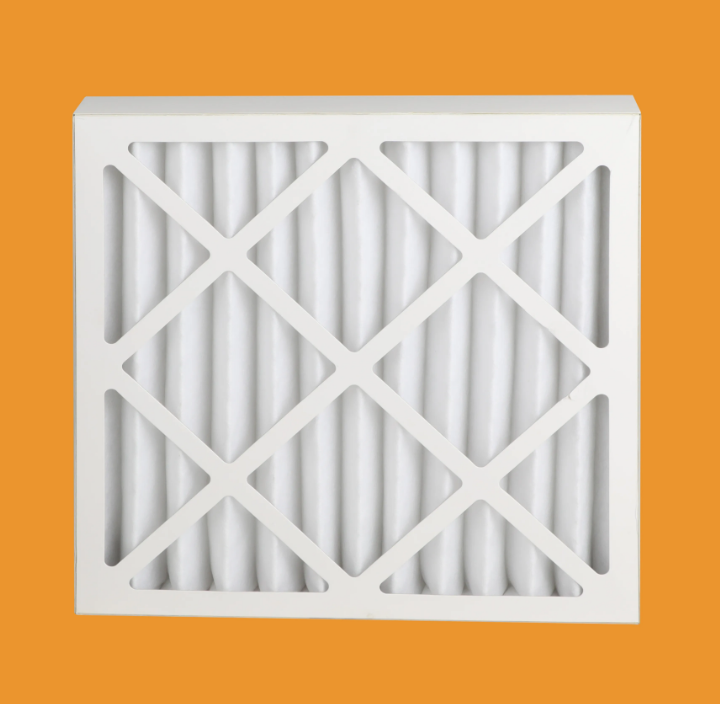
The Filtration Choice That Keeps Facility Managers Up at Night
Walk into any commercial building’s mechanical room, and chances are there’s a ongoing debate playing out in the maintenance logs—should that air handler be running MERV-rated bags or has the situation escalated to HEPA territory? It’s not a trivial question. Get it wrong, and the building either bleeds energy dollars or fails to protect occupants from what’s floating through the supply air.
A 2023 study tracking HVAC performance across 16 U.S. climate zones found that MERV 16 filters delivered a 6.9% reduction in energy consumption, while HEPA filters actually increased energy use in 10 of those cities by 0.7% to 6.3%. The culprit? Pressure drop. Higher resistance means fans work harder, and that cost adds up fast across a 200,000-square-foot commercial space.
Breaking Down What MERV Actually Tells You
The Minimum Efficiency Reporting Value isn’t just a number on a box—it’s a standardized test result governed by ASHRAE Standard 52.2. The scale runs from 1 to 16 for conventional commercial systems, with each step up representing a meaningful jump in particle capture across three size bands: 0.3–1.0 microns, 1.0–3.0 microns, and 3.0–10.0 microns.
Here’s the practical breakdown of what those ratings actually mean in the field:
| MERV Rating | 0.3–1.0 μm Efficiency | 1.0–3.0 μm Efficiency | 3.0–10 μm Efficiency | Typical Application |
|---|---|---|---|---|
| 8 | Not rated | ≥20% | ≥70% | Commercial pre-filtration |
| 11 | ≥20% | ≥65% | ≥85% | Better commercial buildings |
| 13 | ≥50% | ≥85% | ≥90% | Hospitals, critical environments |
| 14 | ≥75% | ≥90% | ≥95% | Superior air quality required |
| 16 | ≥95% | ≥95% | ≥95% | Highest MERV before HEPA |
Data sourced from ASHRAE Standard 52.2-2017
A MERV 8 filter catches roughly 70% of particles in the 3-to-10-micron range—think pollen, dust mites, and cement dust. Jump to MERV 13, and that same filter now captures at least 50% of particles down to 0.3 microns, including bacteria and smoke. The difference isn’t subtle.
What Sets HEPA Apart—and Why It’s Not Always the Answer
True HEPA filtration requires removing 99.97% of particles at 0.3 microns—the most penetrating particle size. That’s the EPA’s benchmark, and it’s a bar that MERV-rated filters simply cannot clear.
But here’s where commercial operators often get burned: HEPA filters are physically thicker, create significantly more airflow resistance, and typically cost anywhere from $180 to $500 per filter. They’re designed for cleanrooms, pharmaceutical manufacturing, and hospital operating rooms—not for general office buildings or light industrial spaces.
A manufacturing plant in the Midwest learned this the hard way. The facility swapped its MERV 14 bags for HEPA filters in an attempt to address a quality issue with a sensitive product line. Within three months, the HVAC fan motors showed measurable wear, static pressure had climbed 40%, and the energy bill jumped nearly 8%. The product quality issue turned out to be unrelated to filtration. The HEPA filters came out, the MERV 14 bags went back in, and the system returned to baseline performance.
Where the Cost Equation Gets Interesting
Total cost of ownership tells a different story than upfront price. A MERV 13 filter might cost $40–$60 per bag, while a HEPA equivalent can run $200 or more. But the real differentiator is pressure drop—and the fan energy required to overcome it.
Commercial HVAC systems typically account for over 40% of building energy use, and filters directly drive the energy consumption of the fans moving that air. A study examining lifecycle costs found that MERV 14 filters delivered average utility savings of $552 per year, while MERV 16 filters pushed that figure to $1,514 annually. Those numbers represent real money across a portfolio of buildings.
The trade-off works like this: higher MERV ratings capture more particles but create more resistance. HEPA takes that resistance to another level entirely. For most commercial applications, the sweet spot lives somewhere between MERV 13 and MERV 16—enough filtration to protect occupants without strangling the HVAC system.
The Practical Reality of Retrofitting Existing Systems
Slapping HEPA filters into a system designed for MERV 8 bags isn’t just inefficient—it can be damaging. The existing ductwork, fan capacity, and motor sizing all assume a certain pressure drop. Exceeding that design parameter forces the system to work harder, which shortens equipment life and increases the risk of unexpected downtime.
A shopping center in the Southeast attempted to upgrade from MERV 8 to MERV 14 across all its rooftop units without evaluating fan static pressure capabilities. Six months later, three of the twelve units had failed bearings. The maintenance team traced the issue back to the increased load from the denser filter media. The fix? Replacing the failed units and stepping back to MERV 11, which provided adequate protection for the occupancy level without overtaxing the equipment.
The lesson here isn’t that MERV 14 is bad—it’s that the existing infrastructure has to support the chosen filtration level. A proper assessment of fan curves, motor horsepower, and duct static pressure should precede any significant change in filter specification.
Making the Call: Matching Filtration to Actual Needs
The decision framework isn’t complicated, but it does require honest answers to a few questions. What’s the occupancy type and density? What airborne contaminants are actually present? What’s the existing HVAC system designed to handle?
For a standard office building with 100 to 200 occupants, MERV 8 to MERV 11 typically provides sufficient protection without overburdening the system. Healthcare facilities and laboratories often require MERV 13 to MERV 14 as a baseline. True HEPA filtration belongs in spaces where sterile conditions or extreme particle control is non-negotiable—and where the HVAC system was designed from the ground up to support it.
One approach that consistently works well in practice is staging filtration: a MERV 8 pre-filter catches the big stuff, extending the life of a MERV 13 or MERV 14 final filter downstream. The pre-filter takes the brunt of the loading, the final filter handles the fine particles, and the overall system pressure drop stays manageable.
Companies like GL Filter Bags have built their manufacturing around this kind of practical understanding—producing filter media that balances efficiency with real-world operating constraints, backed by consistent quality control across production runs.
Table of Contents
- The Filtration Choice That Keeps Facility Managers Up at Night
- Breaking Down What MERV Actually Tells You
- What Sets HEPA Apart—and Why It’s Not Always the Answer
- Where the Cost Equation Gets Interesting
- The Practical Reality of Retrofitting Existing Systems
- Making the Call: Matching Filtration to Actual Needs