
 EN
EN



Understanding the Science of Clean Air
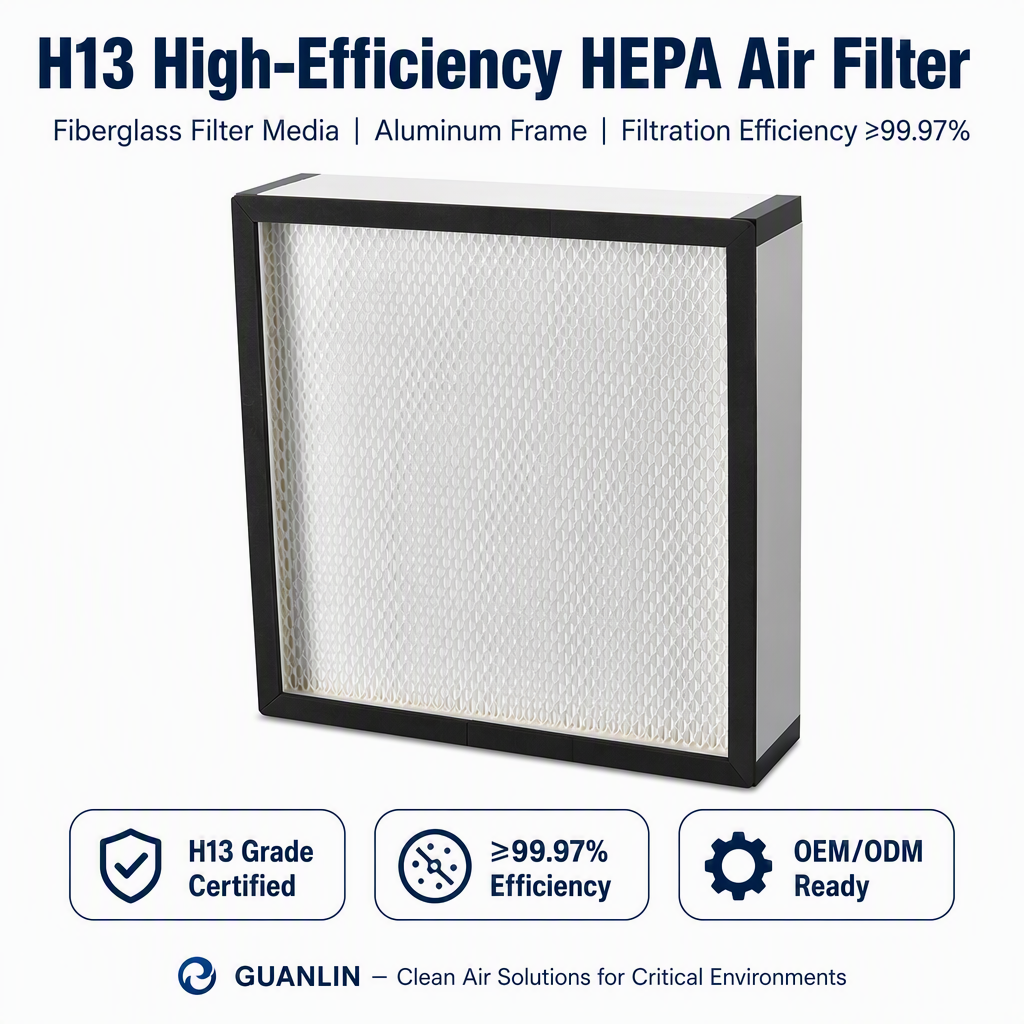
In today’s industrial and residential environments, air quality is more critical than ever. Whether you are managing a high-tech manufacturing facility or simply want to ensure your office remains free of allergens, the term "hepa filter" is one you have likely encountered. At its core, this device is a high-efficiency particulate air unit designed to capture an astounding 99.97% of airborne particles as small as 0.3 microns. While many people believe that a hepa filter functions like a simple sieve or screen, where particles are physically stopped by small holes, the reality is far more sophisticated. A high-quality filtration unit utilizes a complex matrix of randomly arranged fibers to trap pollutants through advanced physics, ensuring that your indoor environment remains safe and healthy for everyone. By understanding how such technology operates, you can make informed decisions about your air filtration needs and select the right solutions for your specific applications.
The Three Pillars of Particle Capture
To achieve such high levels of efficiency, a hepa filter relies on three primary physical mechanisms that work in harmony: interception, inertial impaction, and diffusion. First, interception occurs when particles in the airflow come within a certain distance of the filter fibers. As the air navigates around these obstacles, the particles are "intercepted" by the fiber surface and held in place by molecular forces. Second, inertial impaction is responsible for capturing larger, heavier particles. Because these particles possess significant mass, they cannot follow the sudden directional changes of the airstream and instead collide directly with the filter fibers. Finally, diffusion handles the smallest particles. Through Brownian motion, these tiny particles move in erratic, zigzag patterns, increasing the probability that they will strike and adhere to the fibers of the media. This multi-layered approach is exactly why a hepa filter is so much more effective than standard air filters found in conventional systems.
Addressing the 0.3-Micron Standard
You may wonder why 0.3 microns is the benchmark for measuring the performance of a hepa filter. In the world of air filtration, 0.3 microns is considered the "Most Penetrating Particle Size" (MPPS). While it might seem intuitive that the smallest particles are the hardest to catch, the science reveals that particles of this size are actually the most elusive because they are neither heavy enough for impaction nor small enough for efficient diffusion. By designing a hepa filter to catch 99.97% of these "worst-case" particles, engineers guarantee that the filter will be even more efficient at capturing larger dust and pollen particles, as well as significantly smaller pathogens like viruses. This rigorous testing standard is what separates a certified hepa filter from generic filtration products, ensuring that your air quality is backed by scientific precision and verified performance.
Practical Applications in Real-World Settings
The versatility of a hepa filter makes it an essential tool across diverse sectors, from cleanroom manufacturing to home health maintenance. At Great Lakes Filter (glfilterbags.com), we recognize that the effectiveness of your air treatment strategy depends heavily on the quality and integrity of your filtration media. Whether you are dealing with industrial dust, mold spores, or volatile fine particulate matter, integrating a reliable hepa filter into your system provides a critical line of defense. Because these filters are designed to handle such a high volume of contaminants without compromising airflow, they are the preferred choice for environments where safety is not negotiable. When selecting the right unit, it is important to consider the operating environment, as the depth and density of the fiber matrix can be optimized to balance filtration efficiency with pressure drop, ensuring your system runs optimally.
Ensuring Long-Term Filtration Reliability
While the technology behind a hepa filter is powerful, its lifespan and effectiveness are ultimately determined by proper maintenance and system integration. A common misconception is that a hepa filter can be cleaned and reused indefinitely; however, as the fibers become saturated with captured particles, the pressure drop across the filter increases, which can stress your air handling equipment. At our facility, we emphasize the importance of regular monitoring and timely replacement to ensure that your filtration unit continues to perform at its peak. Furthermore, ensuring that your filter is properly sealed within its housing is paramount. Even a tiny leak can allow contaminated air to bypass the media, rendering even the most advanced hepa filter ineffective. By prioritizing a well-sealed system and adhering to scheduled maintenance, you can maximize the return on your investment in high-performance air quality solutions.
Making the Right Choice for Your Air Quality
Investing in a high-quality hepa filter is more than just a purchase; it is a commitment to the health and safety of your space. As you navigate the many options available for air filtration, remember that not all filters are created equal. The efficiency of a hepa filter is a result of precise engineering, rigorous testing, and a deep understanding of particle physics. Whether you are upgrading your industrial ventilation or seeking better protection for your indoor environment, choosing a product that meets global standards is the best way to ensure reliable results. If you need guidance on selecting the appropriate filtration media or want to discuss how a specialized hepa filter can integrate into your existing setup, we are here to provide the expertise you need. Clean air is a necessity, and with the right equipment, it is an achievable standard for every facility.