The Complex Reality of High-Temperature Dust Collection
Industrial processes such as heavy-duty waste incineration, large-scale power generation, and sophisticated chemical production create flue gases that are exceptionally hot and often chemically harsh. Managing dust collection systems in these challenging environments creates a significant engineering hurdle for facility operators. Choosing a filtration medium that can survive these extreme conditions while continuing to maintain high particle collection efficiency becomes essential for both environmental compliance and consistent operational flow. While individual synthetic fibers like P84 offer impressive filtration properties and pure PTFE provides unmatched chemical resistance, blending these two materials has emerged as a high-performance strategy. Understanding the technical synergy behind this composite approach is the secret to optimizing the performance of high-temperature dust collectors in the most demanding industrial settings.
Unlocking Technical Synergy Through Fiber Blending
The engineering brilliance of the P84 and PTFE blend lies in the clever combination of their distinct physical and chemical characteristics. P84 is well-known throughout the industry for its unique trilobal fiber cross-section, which provides a significantly larger surface area compared to standard fibers. This increased area enables superior fine dust capture and higher filtration efficiency, which helps plants meet stringent emission standards. However, P84 can be sensitive to moisture and acidic environments when used on its own. This is where PTFE fiber bridges the performance gap. PTFE is virtually inert, boasting exceptional thermal stability and resistance to nearly all chemical attacks that occur in flue gas streams. By blending these two materials, the resulting composite filter media gains the structural filtration efficiency of P84 while being shielded by the chemical and thermal resilience of PTFE, creating a robust fabric that thrives in conditions where single-fiber solutions often reach their limit.
Operational Benefits in Durability and Dust Cake Release
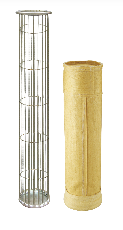
In practical, everyday terms, the P84 and PTFE blend significantly improves the operational lifecycle of filter bags in harsh environments. The presence of PTFE on the surface layer of the felt helps in forming a non-stick surface, which is absolutely critical for effective dust cake release during pulse-jet cleaning cycles. This prevents the dreaded blinding effect, where fine dust particles become deeply embedded in the fiber matrix, forcing the pressure drop to climb and airflow to drop significantly. Because the blend maintains its structural integrity and permeability over a much wider range of temperatures and chemical exposures, the pressure drop across the filter remains lower for longer periods. This doesn't just keep the dust collector running at its peak capacity; it also reduces the excessive energy consumption of the plant's massive induced draft fans, providing long-term operational savings.
Insights on Choosing the Right Filtration Strategy
In professional filtration consulting, a frequent observation is that unplanned downtime acts as the primary enemy of industrial profitability. Facilities that make the switch to high-quality P84 and PTFE blended media often report a noticeable increase in the time between required filter change-outs. In municipal solid waste incineration plants, for instance, flue gases often fluctuate in their chemical composition and moisture content. Traditional, lower-grade filters might degrade rapidly under these variable, unpredictable conditions. However, installations utilizing high-quality blended media have demonstrated consistent emissions control and mechanical stability, effectively navigating these difficult variables without requiring premature, costly replacements. This reinforces the core engineering principle that investing in a technically appropriate, high-performance fiber blend proves to be far more cost-effective than repeatedly installing cheaper, less durable alternatives that demand constant attention.
Guanlin’s Approach to Precision Manufacturing and Supply
Securing a superior fiber blend represents only the first step in the process; the ultimate, long-term effectiveness of any filtration strategy rests heavily on the precision of the manufacturing process and the absolute consistency of the supply chain. Guanlin emphasizes that industrial filtration is just as much about precise textile engineering as it is about chemical compatibility. Every filter bag produced by Guanlin adheres to stringent quality benchmarks, starting from the careful distribution of the fibers to the integrity of the seams and the precision of the stitching. By integrating advanced production techniques with a stable and responsive supply chain, Guanlin ensures that facilities can maintain consistent filtration performance, minimize the risk of unplanned downtime, and remain fully in compliance with local environmental regulations. Relying on such deep manufacturing expertise allows industrial operations to focus entirely on productivity, secure in the knowledge that their filtration media is engineered for long-term reliability.
Investing in Sustainable and Reliable Performance
Blending P84 and PTFE represents a scientifically sound approach to modern high-temperature filtration requirements. By leveraging the specific, complementary strengths of each fiber, plants can ensure better air quality, lower energy costs, and significantly longer maintenance intervals. Choosing to collaborate with a partner like Guanlin, which prioritizes manufacturing excellence and deep technical understanding, allows companies to implement these advanced filtration solutions with complete confidence. Ultimately, investing in the right composite filtration media is a strategic decision that drives both environmental compliance and operational efficiency. The most effective filtration solutions are built on a foundation of proven performance, consistent engineering, and a focus on sustainable, long-term operational results.

 EN
EN